

Read article
Selected clients

















The demands on modern warehouse sites are growing rapidly. At the same time, the SAP world is undergoing radical change: proven systems need to be modernised and new potential unlocked with S/4HANA. But which architecture fits your throughput, your automation and your growth targets?
Typical topics
Do these sentences sound familiar?
This is what it sounds like when we talk to warehouse, logistics and IT managers. Whether SAP is already in use or not.
 Our clients with SAP
“My people feel like they walk a half marathon every day, and still it gets tight with the lorry every afternoon.”
Warehouse manager Efficiency Our clients with SAP
“When the system says the item is there, I still send someone to check first.”
Warehouse manager Quality Our clients with SAP
“The new hall will be ready in three months. Nobody knows yet how we will get it into the system without bringing everything else to a standstill.”
Head of logistics Expansion Our clients with SAP
“For one additional field on the delivery note, I get a quote for three consulting days.”
Head of IT Dependency Our clients with SAP
“The equipment supplier asks which interface SAP needs, and we realise that nobody has decided that yet.”
Intralogistics project manager New warehouse Our clients with SAP
“We wanted one system, now we have two – and two service providers for every change.”
Head of IT Automation Our clients with SAP
“We are spending millions on S/4, and in the end the warehouse works exactly as it did 15 years ago.”
Head of IT S/4 transformation Our clients with SAP
“It is clear that we are switching. What is still open is how we manage it during live operations without the lorries waiting in the yard.”
Head of logistics System migration Our clients without SAP
“I don't need another glossy demo. I need a clear answer: does SAP fit our processes? And if so, which SAP WMS fits best?”
Head of IT System fit Our clients without SAP
“Everyone tells me about SAP projects that got out of hand. That is exactly what must not happen to us.”
Warehouse manager Quality
Warehouse logistics with SAP – from the first analysis to live operations
Whether you already use SAP in your warehouse or are planning to introduce it: we find the right starting point for your situation, in logistics and in IT.
Next level warehouse logistics
More throughput, often simply by using SAP standard functions that lie idle.
Fewer errors and reliable stock thanks to clear, scanner-based processes.
Integrate new areas or sites without disrupting ongoing operations.
Factor in SAP from the start, coordinated with planners and suppliers.
Connect shuttles, AS/RS and conveyor systems cleanly to SAP EWM.
Use AI specifically where it delivers real benefits, such as forecasts, workforce planning, process/error analysis.
IT transformation
Clarity on how well SAP EWM fits your processes.
Introduce the right SAP WMS solution, from concept to stable operation.
Move safely from WM or a third-party system to SAP EWM, with minimal interruption.
Transparency about your solution and know-how in your own team.
Systems & technology fit
From a small warehouse to a fully automated logistics hub
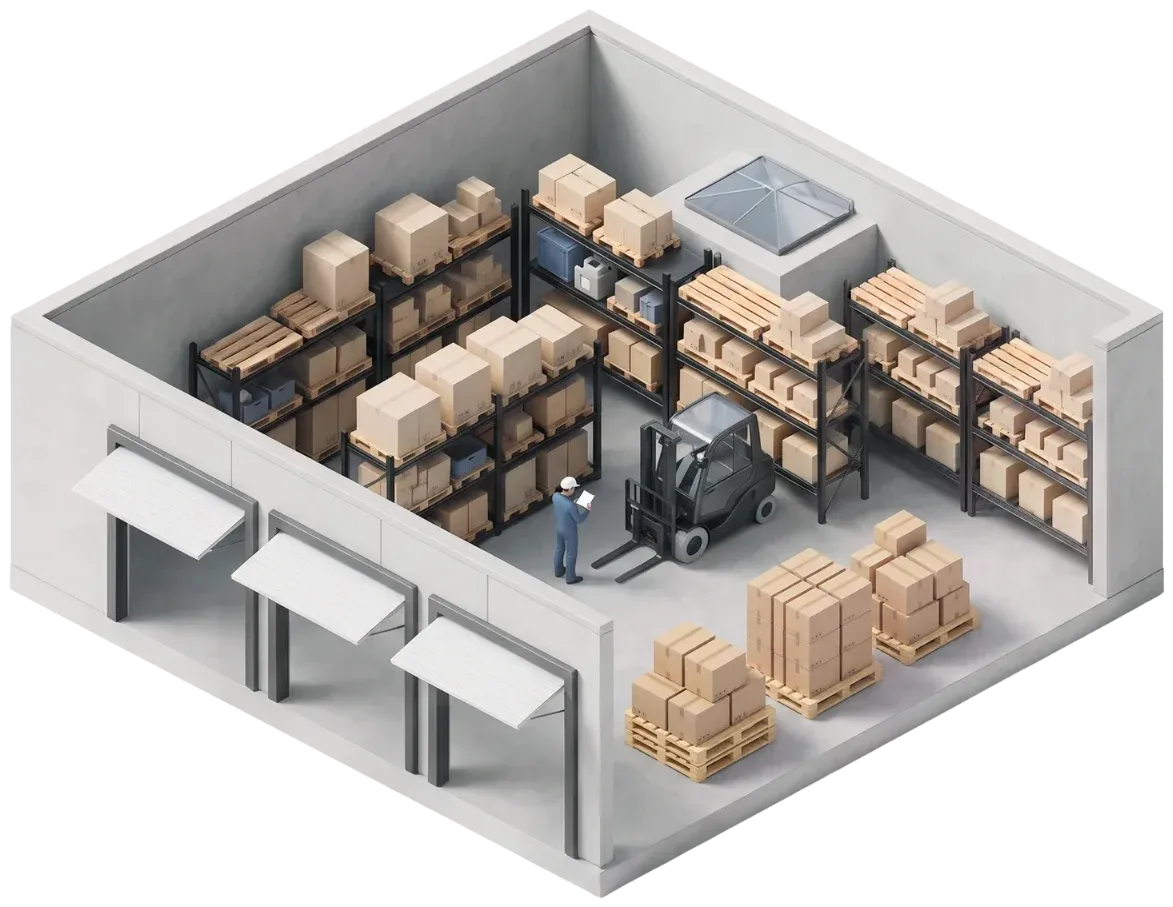
Three questions determine the choice. How much moves per day? How much of it runs through automated equipment? And how many different processes need to come together in one system?
- Legacy / interim solution
 Warehouse size
SAP Stock Room Management
At a glance- Outdated legacy architecture
- Only for 1:1 legacy system migrations
- No further development
Warehouse complexityVery low (no MFS/yard)ExtensibilityRestricted (legacy code)Admin effortLow (in the ERP core)Time to go-liveVery fast (1–3 months)Cost / TCOVery low (in ERP licence)Technology & AI (Joule)Outdated (no SAP Fiori / no AI) - SaaS standard
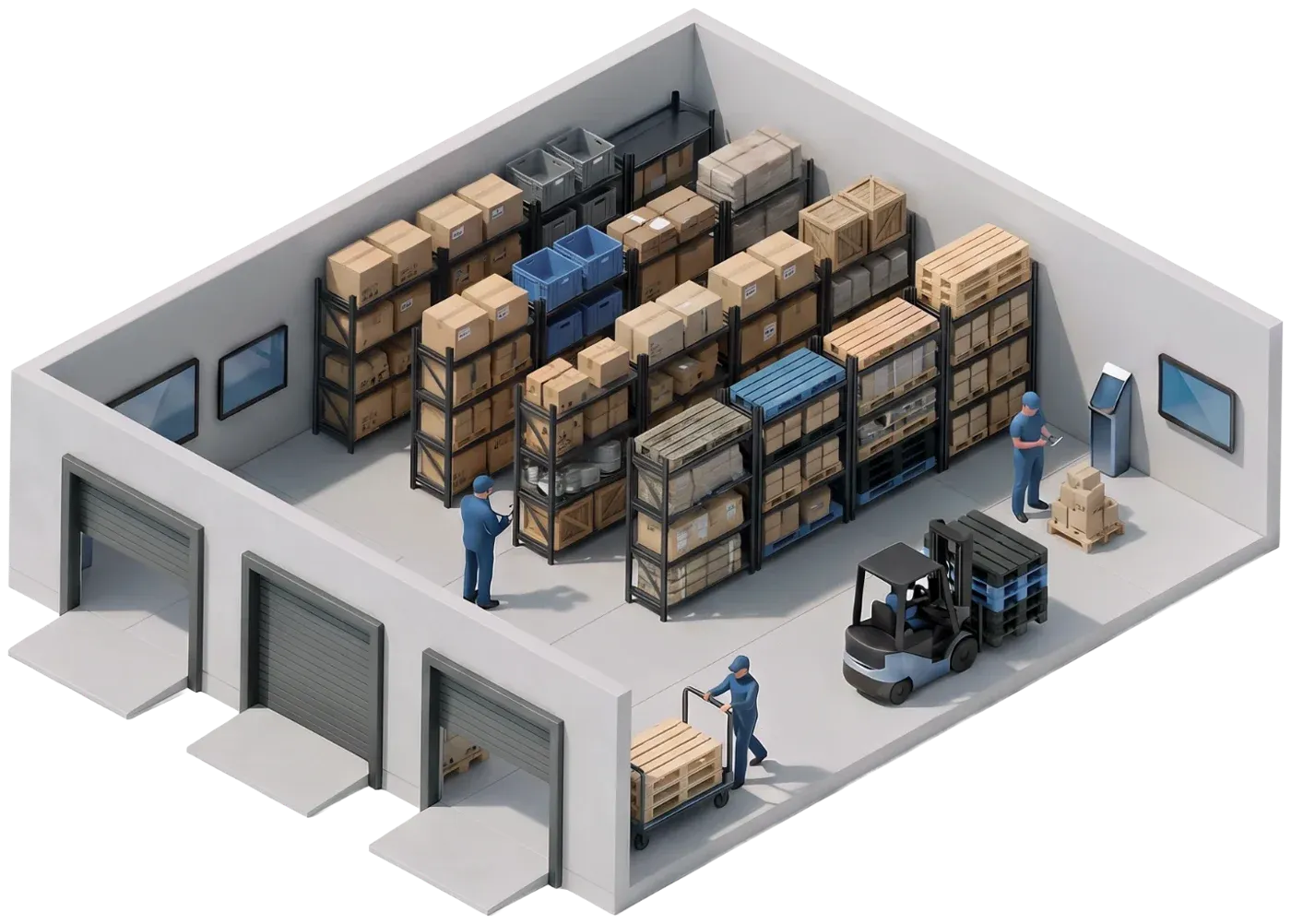 Warehouse size
SAP Public Cloud WM
At a glance- Warehouse Management in S/4HANA Cloud Public Edition
- Use of standard processes
- Strict clean core, no MFS
Warehouse complexityLow to medium (standard)ExtensibilityRestricted (clean core)Admin effortNone (full SaaS)Time to go-liveFast (3–6 months)Cost / TCOMedium (OpEx/subscription)Technology & AI (Joule)Highest innovation (Joule native) - Decentralised hubs / SaaS
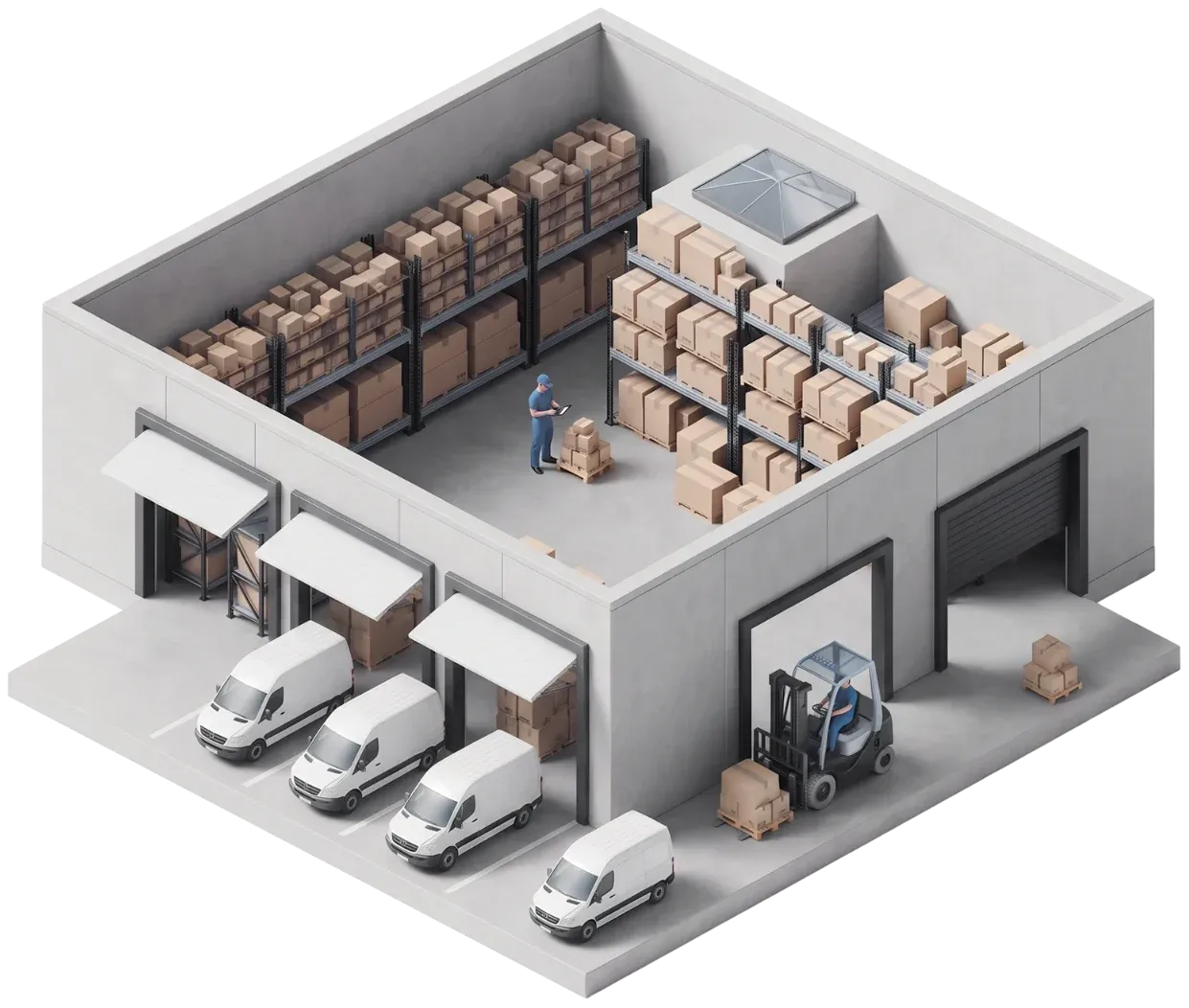 Warehouse size
SAP Logistics Management (LGM)
At a glance- Decentralised hubs / depots & satellites
- Cloud SaaS on SAP BTP
Warehouse complexityLow to medium (decentralised hubs)ExtensibilityLow (via APIs as a side-by-side extension)Admin effortNone (full SaaS)Time to go-liveFast (2–4 months)Cost / TCOMedium (OpEx/subscription)Technology & AI (Joule)Modern (BTP/cloud-native) - Integrated standard warehouse
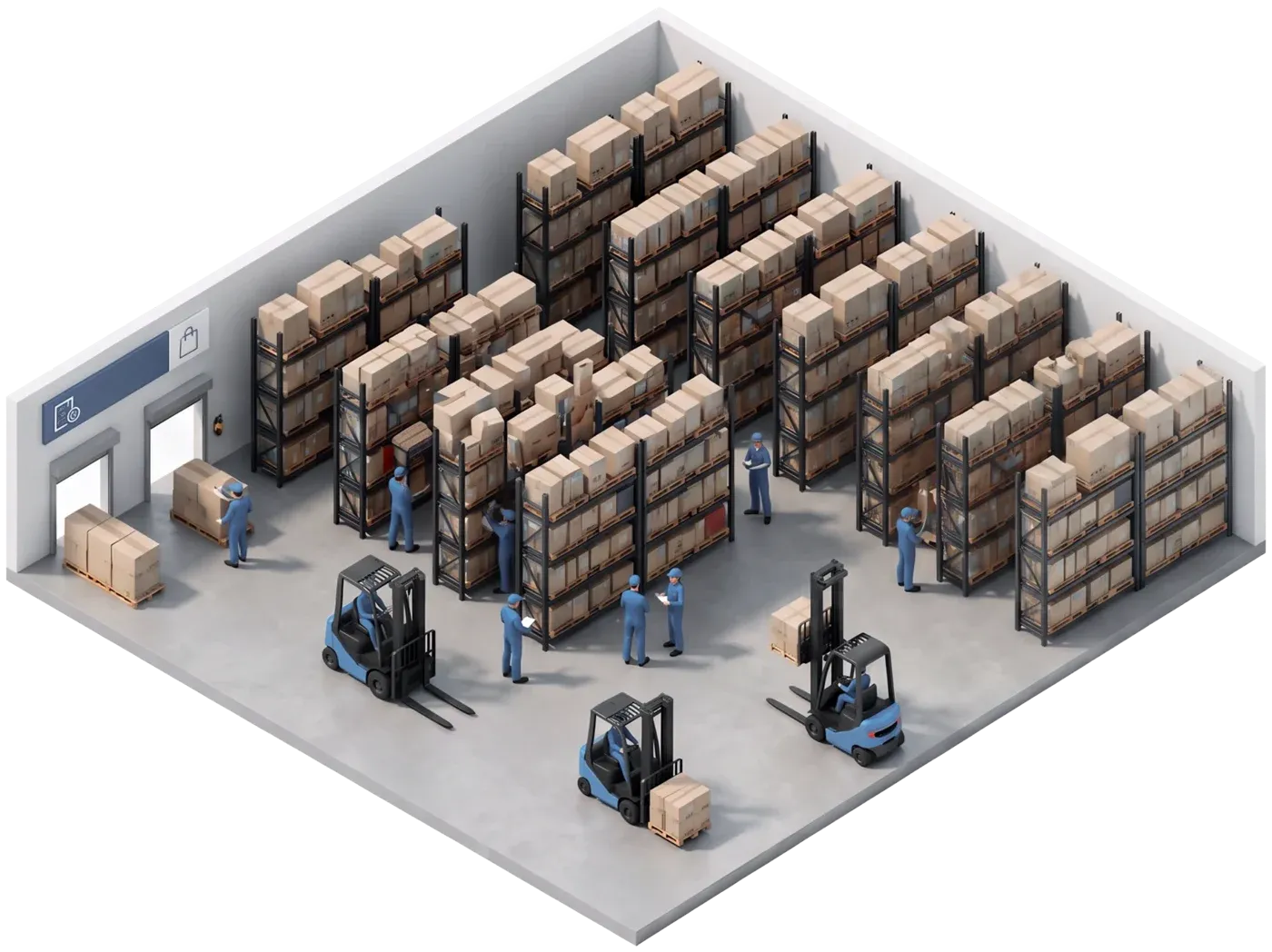 Warehouse size
S/4HANA Embedded EWM Basic
At a glance- Manual & forklift-operated warehouses
- Included in the S/4HANA core licence
- Future-proof standard
Warehouse complexityMedium (no MFS/yard)ExtensibilityUnrestricted (ABAP, Z code & modifications)Admin effortLow to medium (integrated in ERP)Time to go-liveModerate (4–8 months)Cost / TCOVery low (in ERP licence)Technology & AI (Joule)Modern (SAP Fiori & Joule-ready) - The high-end standard
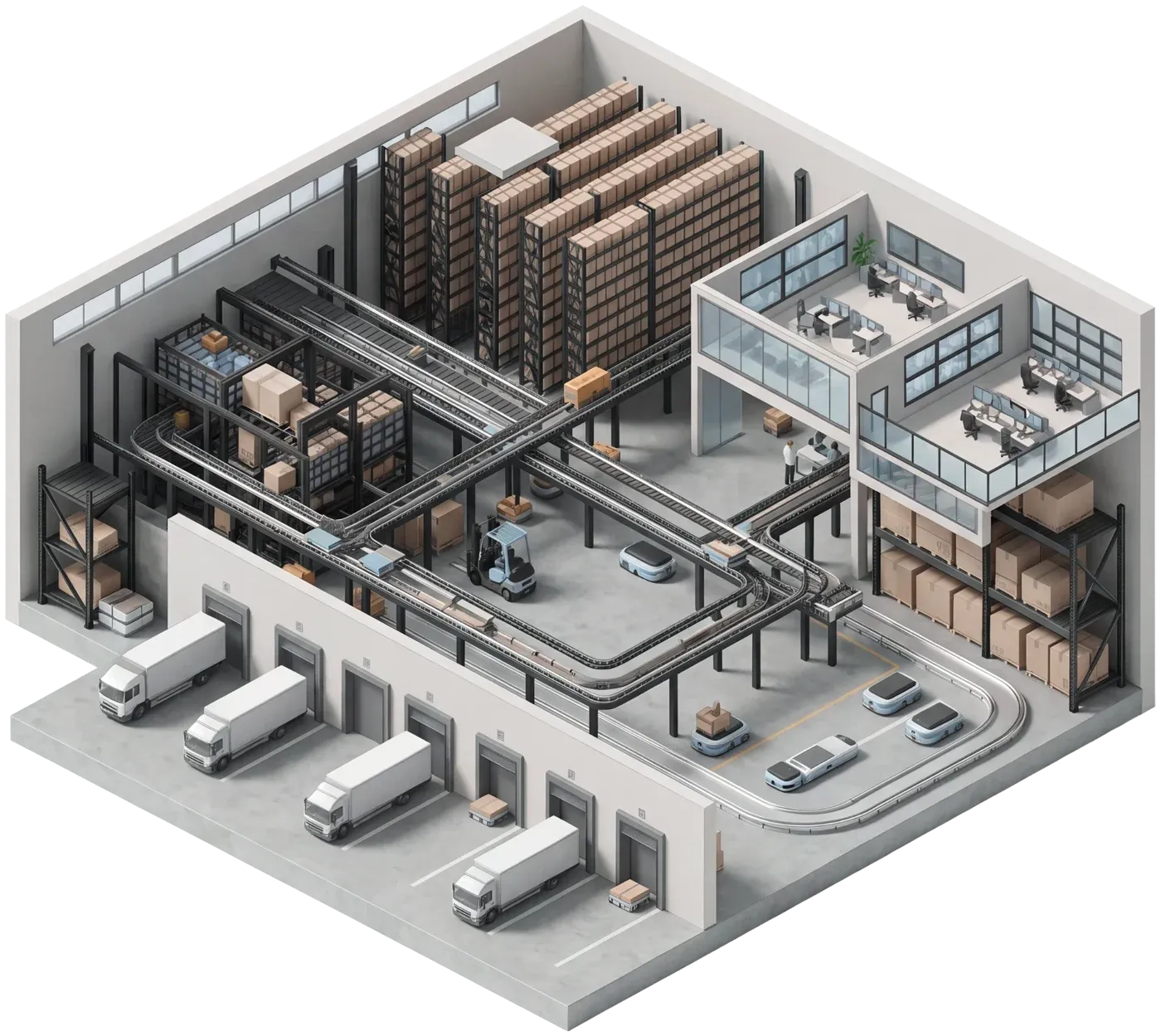 Warehouse size
SAP EWM Advanced
At a glance- Private cloud / on-premise
- Automated warehouses (MFS)
- Decentralised, yard, VAS
- Maximum functional scope
Warehouse complexityHigh to maximum (full scope, MFS)ExtensibilityUnrestricted (ABAP, Z code & modifications)Admin effortMedium to high (extra server/instance)Time to go-liveLong (9–18+ months)Cost / TCOHigh (extra licence required)Technology & AI (Joule)Modern & strategic (Joule)
- Very good / High / Unrestricted
- Medium / Restricted
- Low / None / Outdated
The “Basic” recommendation: for manual or standardised main warehouses, S/4HANA Embedded EWM Basic is the most future-proof choice: fully integrated without extra licences and ready to scale up to Advanced. Automated warehouse? EWM Advanced. SaaS standard? Public Cloud. Keeping an existing legacy system? Stock Room Management.
- Read article
- Read article
- Read article
- Read article
- Read article


FAQ
Frequently asked questions
Is S/4HANA enough for us, or do we need a dedicated warehouse system?
If stock is only managed at storage location level and there are few processes in the warehouse, the S/4HANA standard is often sufficient. If storage bins, picking strategies or automated equipment need to be controlled, you need a warehouse system. We clarify where the line lies for you in a conversation.
What is the difference between a storage location and a storage bin?
The storage location is an area, such as “raw material” or “shipping”. The storage bin is the individual slot in the rack. S/4HANA knows the storage location; only a warehouse system knows the storage bin.
Can we switch to EWM later without reimplementing S/4HANA?
Yes. EWM Basic runs in the same S/4HANA system. The switch affects the warehouse; the ERP stays as it is.
Can EWM Basic really be used without an additional licence?
EWM Basic is part of S/4HANA without an additional licence and covers the standard processes of a warehouse. Only functions such as material flow control, yard management or wave management fall under EWM Advanced and therefore require a separate licence.
How long does an EWM implementation take?
That depends on the size of the warehouse, the degree of automation and the number of processes. After a workshop at your site, we will tell you which timeframe is realistic. We consider blanket estimates in months without looking at the warehouse to be unprofessional.
Does Flowprime also do pure purchasing or sales projects?
Our focus is on warehouse and production logistics. We take on procurement, materials planning and order processing primarily where they supply the warehouse and production – but then completely.