People search.
Learn moreShow less
“When the system says the item is there, I still send someone to check first.” By then at the latest, storage bins are missing in the system.
Many sites do not need a warehouse system of their own. Purchase orders, goods receipt, deliveries and stock at storage location level run in the S/4HANA standard. We set up logistics so that it holds, and recognise early when a warehouse system is due.
By Core Logistics we mean the logistics functions that every S/4HANA comes with. They include purchasing and inventory management, called materials management (MM) at SAP, as well as sales and distribution (SD).
Purchasing orders, goods receipt posts the delivery, and the stock is in the system, per plant and storage location. On the sales side, the customer order becomes a delivery and the delivery a goods issue. Picking is done directly from the delivery.
What the standard does not know are storage bins. S/4HANA knows that 200 cartons are in the storage location “Shipping”. In which rack, it does not know. For many sites that is not a problem, because the staff know their warehouse. As the site grows, this overview is lost.
Core Logistics is also the basis on which every further system builds. EWM and LGM, too, work with the purchase orders, sales orders and deliveries from S/4HANA.
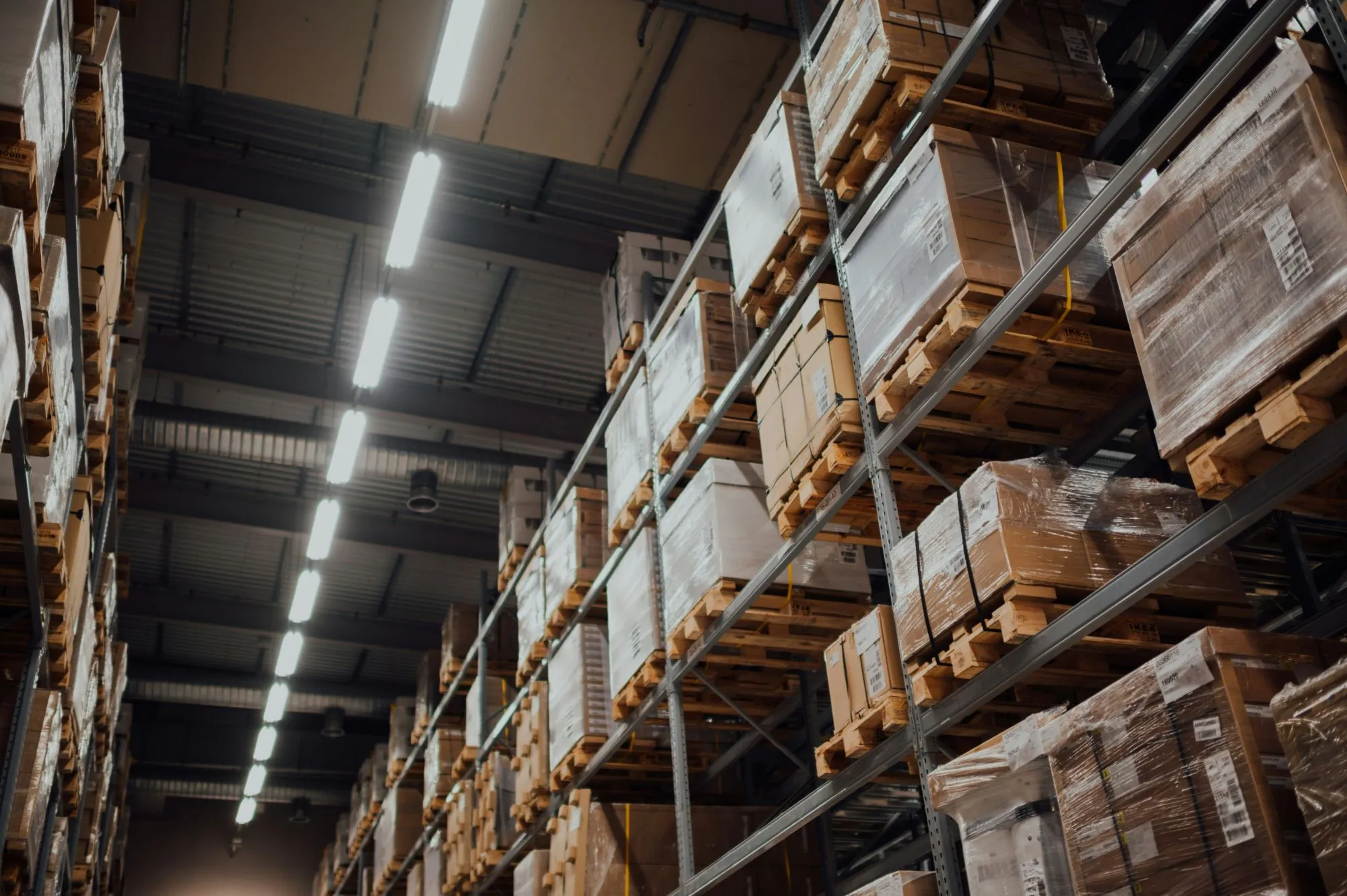
A warehouse system of its own only pays off when the warehouse needs more control than the staff can carry in their heads. Until then, the standard is often the leaner solution, with less customising and less maintenance.
Yes. From the purchase order and the order confirmation to the goods receipt with a check against the purchase order. The stock is in the system immediately.
At the level of plant and storage location, with batches and serial numbers if required. On which place in the rack something is, S/4HANA does not know without a warehouse system. Storage bins are only managed by a warehouse system, SAP Logistics Management for smaller sites, EWM for complex warehouses.
Yes, via the delivery. Staff pick according to the delivery note, the picked quantity is confirmed and the goods issue posted.
Yes. Transfers between storage locations and plants run in the standard, also with a delivery and transport time between the sites.
Yes, as annual, continuous or sampling inventory at storage location level.
Yes. For purchasing, inventory management and shipping, S/4HANA comes with Fiori apps, also for tablets. Where the standard does not fit the workplace, we develop our own apps. More on the SAP Fiori page.
The transition rarely comes with a bang. Usually it shows in everyday work, long before anyone turns it into a project.
“When the system says the item is there, I still send someone to check first.” By then at the latest, storage bins are missing in the system.
Where everything is sits in a list next to SAP and is never quite up to date.
Only those who walk the warehouse every day know the sequence.
The knowledge about the warehouse is in people's heads.
Without storage bins in the system there is little a scanner could check.
The next step does not have to be a big project. EWM Basic is part of S/4HANA without an additional licence and runs in the same system. For external warehouses and smaller sites, SAP Logistics Management brings storage bins as a cloud application. In both cases the ERP stays as it is.
Without a warehouse system of its own, even more depends on the material master, storage location and purchasing info record. Before we talk about new functions, we tidy up there.
Many companies work in S/4HANA as they used to in the old ERP, with the same transactions and the same lists. Fiori apps and new standard functions lie idle, although they have long been licensed.
Whether a warehouse system is due is often decided when a new hall is built or at the first automation. Then time is short. That is why we raise the question early, while there is still time for a clean decision.
We set up logistics in the standard so that it fits warehouse and shipping, and keep the way to a warehouse system open.
System selection: standard, EWM Basic or LGM, fit-to-standard workshops for purchasing, inventory management and shipping
MM and SD in S/4HANA, master data cleansing, data migration, training
Fiori apps for goods receipt, stock transfers and shipping, where the standard does not fit the workplace
Support after go-live, spot consulting, further development of the logistics processes in the standard
If stock is only kept at storage location level and there are few processes in the warehouse, the S/4HANA standard is often enough. If the system should know on which place something is, or if picking strategies and conveyor systems are to be controlled, you need a warehouse system. Where the line is, we clarify in a conversation.
The storage location is an area, such as “Raw material” or “Shipping”. The storage bin is the single compartment in the rack. S/4HANA knows the storage location, only a warehouse system knows the storage bin.
Yes. EWM Basic runs in the same S/4HANA system. The switch concerns the warehouse, the ERP stays as it is.
Our focus is on warehouse and production logistics. We take on purchasing and order processing above all where they supply warehouse and production, but then completely.