SAP technologies

SAP Logistics Management: Warehousing and shipping for smaller sites

SAP’s new cloud solution bundles warehousing and transport in one application. It is intended for external warehouses, smaller plants and shipping sites with standard processes. We check whether LGM fits the site and support the implementation.

01

What is SAP Logistics Management?

SAP Logistics Management, LGM for short, is an SAP cloud solution for warehousing and transport. It has been available since October 2025 and is aimed at sites with manageable logistics.

Read moreShow less

What makes it special is the bundling. Goods receipt, picking, packing and shipping run in the same application as transport planning and coordination with carriers. For a smaller site, this means one system for everything that happens between goods receipt and handover to the carrier.

LGM runs as software-as-a-service on the SAP Business Technology Platform and is connected to S/4HANA. Updates arrive continuously, without a separate upgrade project.

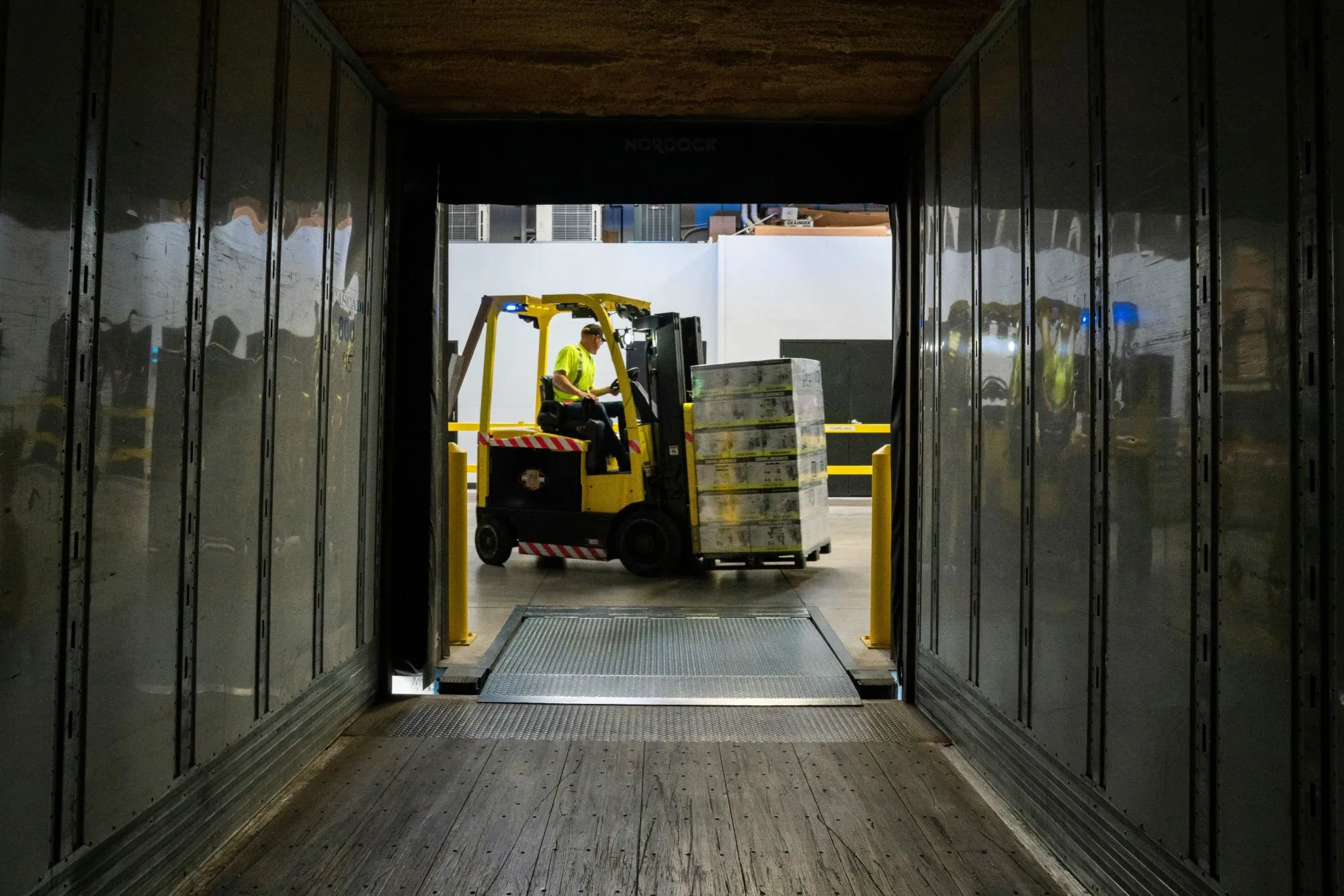
Forklift loading a truck at the loading area
02

When LGM pays off

LGM is built for sites whose logistics remain manageable. Many companies have exactly this mix: a central warehouse with EWM plus several smaller sites for which EWM would be too big. Stock there is often managed only at storage location level, and nobody knows exactly where anything is. LGM closes this gap and brings storage bins to the site with manageable effort.

  • LGM is a good fit for

    • external warehouses, smaller plants and shipping sites
    • sites that have so far managed stock only at storage location level and need an overview at storage bin level
    • standard warehouse processes without many special cases
    • little or no automation
    • sites where warehousing and shipping are closely linked
    • a cloud strategy in the ERP
  • It is worth looking at the alternatives for

    • conveyor systems, shuttles or many different warehouse processesSAP EWM
    • inventory management at storage location level that is sufficient for the siteS/4HANA Core Logistics
    • storage bins in the existing S/4HANA without a new cloud licenceEWM Basic
03

What SAP Logistics Management can do

Can LGM control warehouse operations?

Yes. Goods receipt, putaway, picking, packing and shipping run in LGM, with task bundling and storage bin management.

Does LGM also plan transport?

Yes. LGM plans shipments, obtains quotes from carriers, calculates freight costs and tracks the status in transit. Coordination with carriers runs via the SAP Business Network.

Does LGM plan loading times?

Yes. Loading times for truck loading can be planned and truck arrivals recorded at the gate. Waiting times in the yard become visible before they build up.

Does LGM work on mobile devices?

Yes. SAP provides its own apps for Android and iOS. Picking and packing can therefore also be done on a smartphone.

Does LGM use artificial intelligence?

SAP has integrated the AI assistant Joule into LGM, for example to speed up shipping confirmations or tenders. How far this goes in day-to-day work depends on the process.

Can LGM control automated warehouse technology?

LGM is not built for that. For conveyor systems, shuttles or high-bay warehouses, EWM is the right system.

04

LGM or EWM Basic?

For a smaller site, SAP offers two paths today. Both cover the standard processes of a warehouse. The differences lie in operation, licensing and transport.

Comparison of SAP Logistics Management and EWM Basic
CriterionSAP Logistics ManagementEWM Basic
Operationcloud application on SAP BTPin the S/4HANA system
Licenceseparate cloud licencepart of S/4HANA with no additional licence
Transportincludednot included
Updatescontinuous, without an upgrade projectwith the S/4HANA release
Automationnot intendedconnection possible, control of conveyor systems and stacker cranes (MFS) with EWM Advanced
Growthintended for smaller sitesexpansion to EWM Advanced in the same system
Mobile devicesown apps for Android and iOSmobile barcode scanners (RF) and SAP Fiori apps
A rule of thumb: if the site is to grow or receive conveyor systems later, there is a lot to be said for EWM Basic. If it is to stay lean and get warehousing and shipping from a single source, LGM is worth a close look.
05

Our view of a new system

  • The scope of functions is growing continuously.

    Learn moreShow less

    LGM is continuously receiving new functions. An assessment from six months ago may already be outdated today. Before every decision, we compare the current status with the site’s processes, process by process.


  • The prerequisites matter.

    Learn moreShow less

    LGM is connected to S/4HANA, but not to every variant to the same extent. That is why we clarify right at the start which edition is in use and where the ERP strategy is heading. Only then is it worth looking at the functions.

  • Two systems, one logistics operation.

    Learn moreShow less

    LGM in the external warehouse and EWM in the central warehouse can run well side by side. This requires a shared picture of master data, stock and stock transfers between the sites. We draw this picture before the second system arrives.

06

How we support you with LGM

With a new system, the work begins with the question of whether it fits. After that, we support the implementation and the connection to the other sites.

  • Consulting & analysis

    Learn moreShow less

    System selection between LGM, EWM Basic and EWM Advanced, fit-to-standard against the current functional status, proof of concept for critical processes

  • SAP implementation

    Learn moreShow less

    Design, setup and data migration, including when moving from Stock Room Management, testing and training

  • Equipment connectivity & integration

    Learn moreShow less

    Connection to S/4HANA and to EWM in the central warehouse, stock transfers between the sites

  • Extension & development

    Learn moreShow less

    Extensions on SAP BTP where the standard is not enough

From the blog

FAQs

Frequently asked questions about SAP Logistics Management

Is LGM the successor to Stock Room Management?

SAP names LGM as an option for companies that work with Stock Room Management today. The switch is a separate implementation with design and data migration. Which path fits is shown on the Stock Room Management page.

Does LGM run with our S/4HANA?

LGM is currently built for S/4HANA Cloud Private Edition; SAP has announced further editions. We clarify at the start which constellation works for a company.

Is LGM a slimmed-down EWM?

No. LGM is a separate application with its own cloud architecture. It covers the standard processes of a warehouse and also brings transport functions that EWM does not have.

Can EWM and LGM run in the same company?

Yes. A typical picture is EWM in the central warehouse and LGM at smaller sites. What matters is a shared concept for master data and stock transfers.

How quickly can LGM be implemented?

Much faster than EWM, because the scope is smaller and no separate system has to be set up. We give a realistic time frame after looking at the site and processes.

Warehouse worker in a hard hat carrying a box, seen from above

Does LGM fit this site? A few sentences about the site are enough for an initial assessment. We tell you whether LGM, EWM Basic or the S/4HANA standard fits best.